The team's tips:
- Give yourself 30 minutes before setting off: Drive around an empty car park or along a quiet road to get used to the vehicle before tackling traffic.
- Repeat “stay left” to yourself at roundabouts: This is where old habits tend to kick back in. Having a passenger remind you helps enormously.
- Never park in a passing place: These lay-bys on single-track roads must stay clear so vehicles can pass each other.
- Trust the locals: If a vehicle is right behind you on a narrow road, it’s probably driven by someone who knows every bend. Let them pass as soon as you can.
- Allow more time than Google Maps suggests: Its estimates don’t always account for the winding, single-track roads in the Highlands.
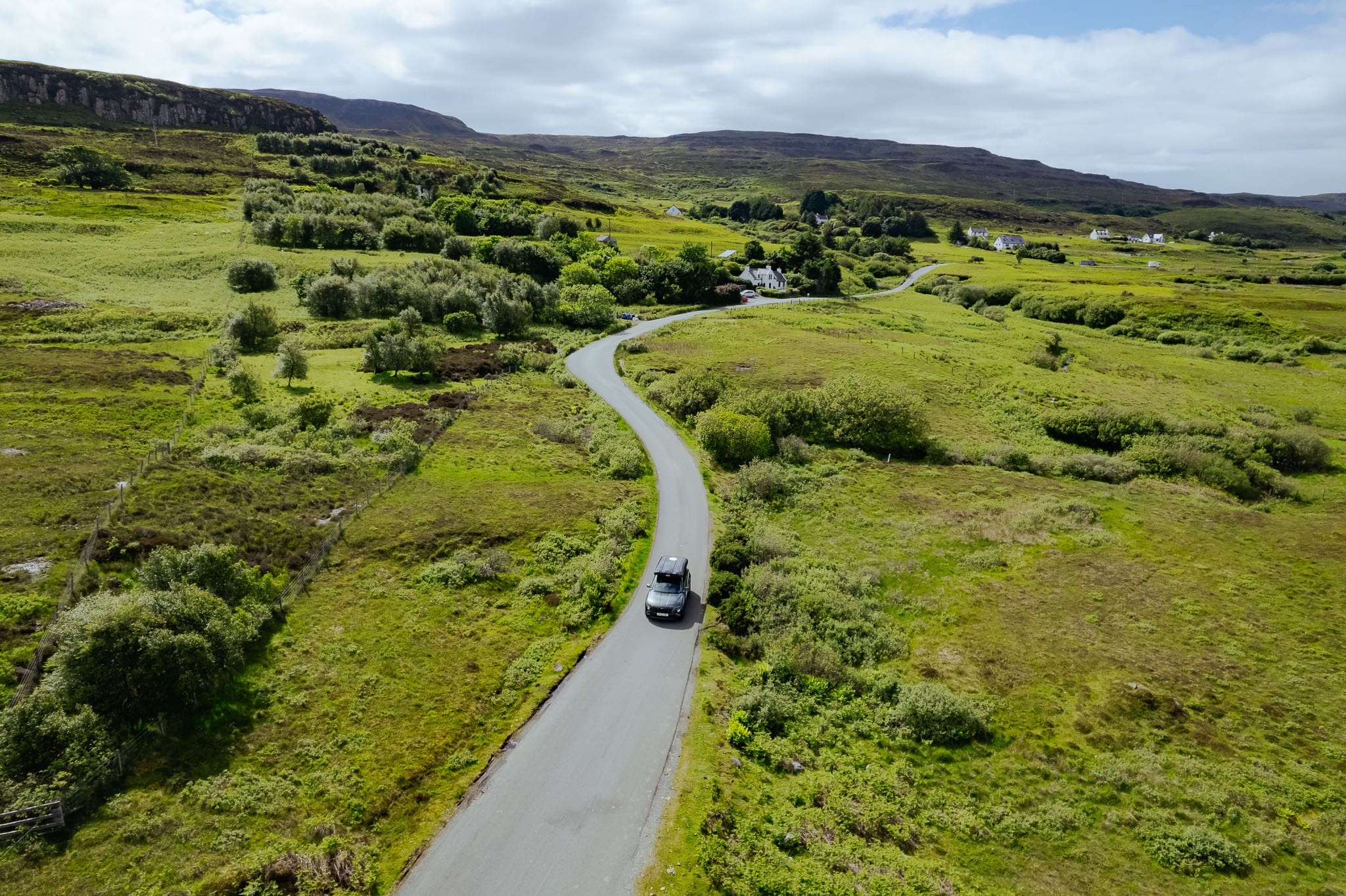
Driving in Scotland: driving on the left, single-track roads and everything you need to know
C’est LA question qu’on nous pose le plus souvent : “est-ce que conduire en Écosse, c’est compliqué ?” La réponse courte : non, pas vraiment. La réponse un peu plus longue : ça demande quelques ajustements, mais rien d’insurmontable, même pour un premier road trip à l’étranger.
Conduite à gauche, routes à voie unique, limitations en miles : voici tout ce qu’il faut savoir pour prendre la route en toute confiance, que vous voyagiez en solo ou avec Scotland Nomads.
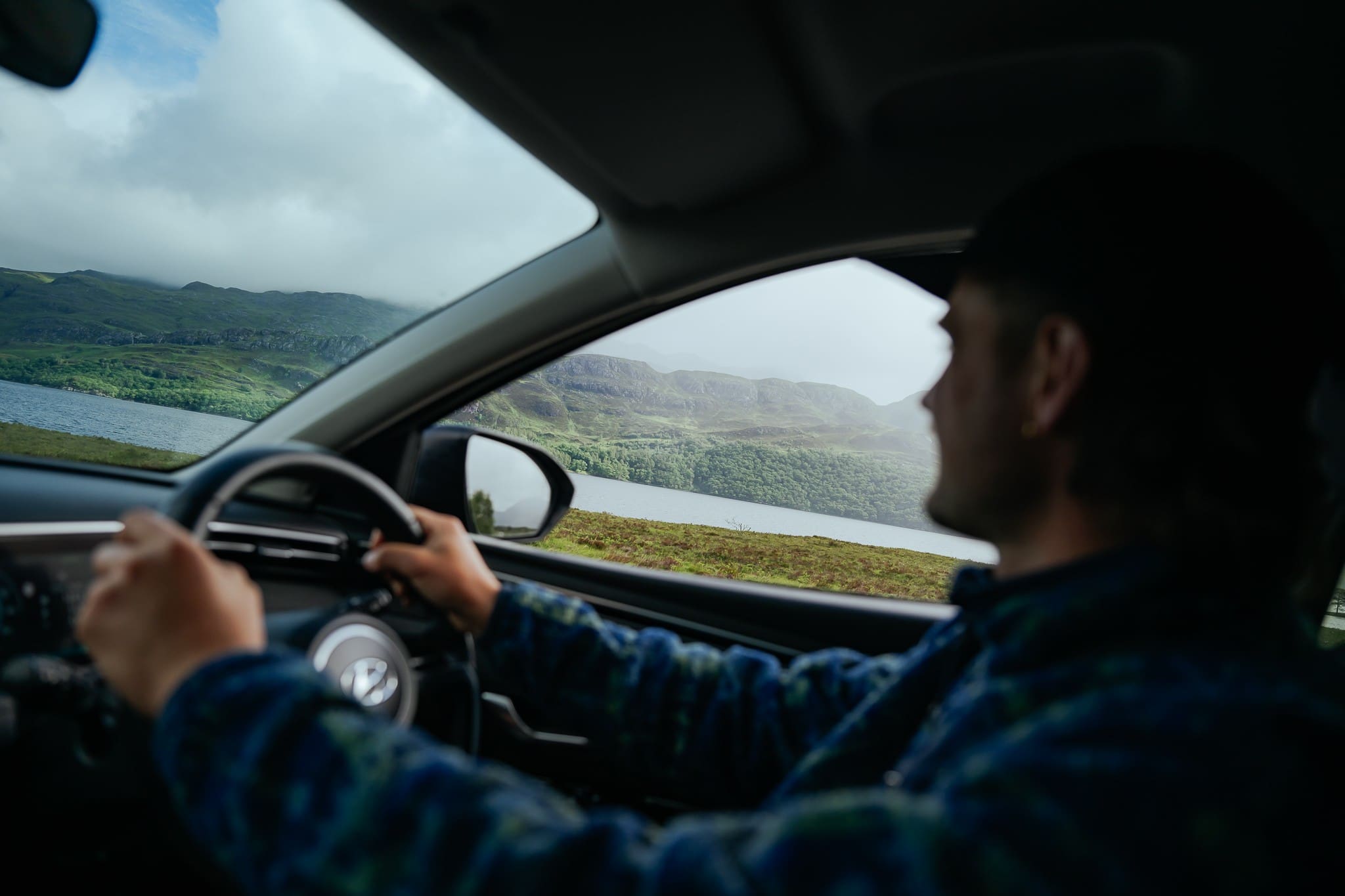
Driving on the left: less intimidating than you might think
The classic worry before setting off on a road trip in Scotland. And yet, most travelers get used to it in just a few hours.
The basic principle is simple: you stay on the left, the steering wheel is on the right, and you change gears with your left hand. It may sound confusing on paper, but in practice, your body adapts quickly. After about thirty minutes of driving, most of your reflexes naturally fall back into place.
Pay particular attention at roundabouts, which you take in the opposite direction from what you're used to, and on the first bends after stopping, when you may instinctively move back onto your usual side of the road. Nothing serious, just stay alert during the first few days.
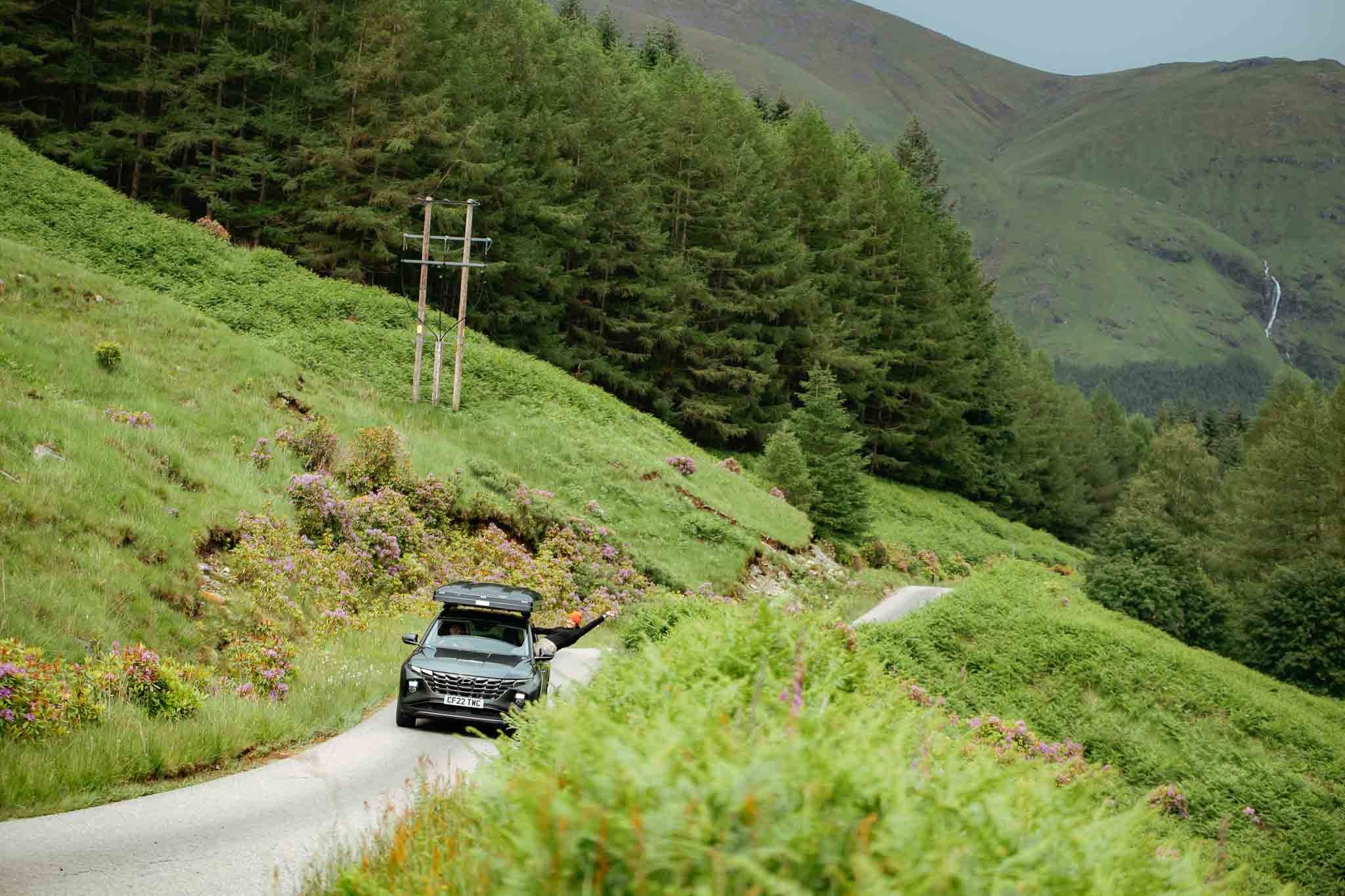
Single-track roads: Scotland’s unique feature
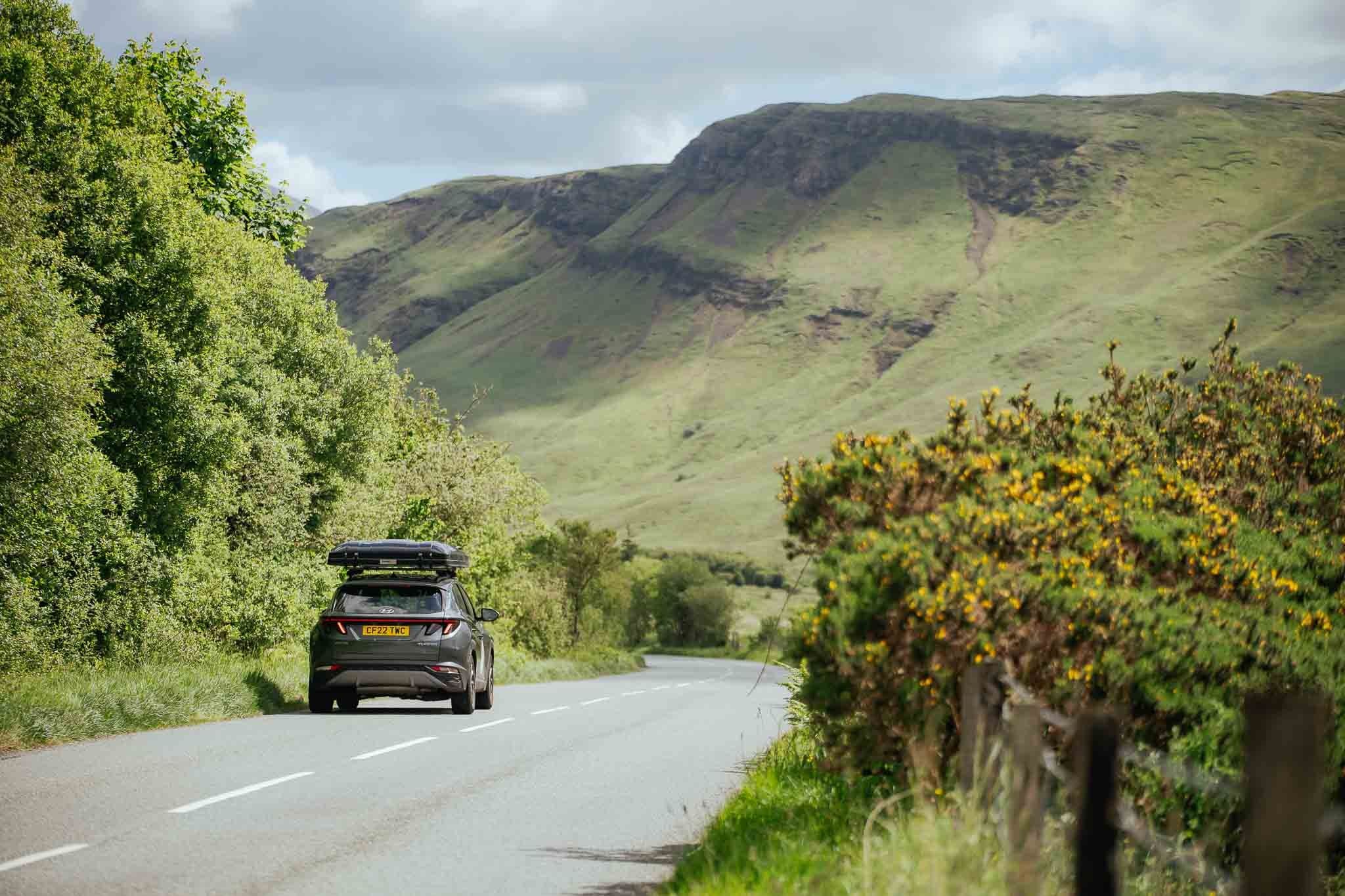
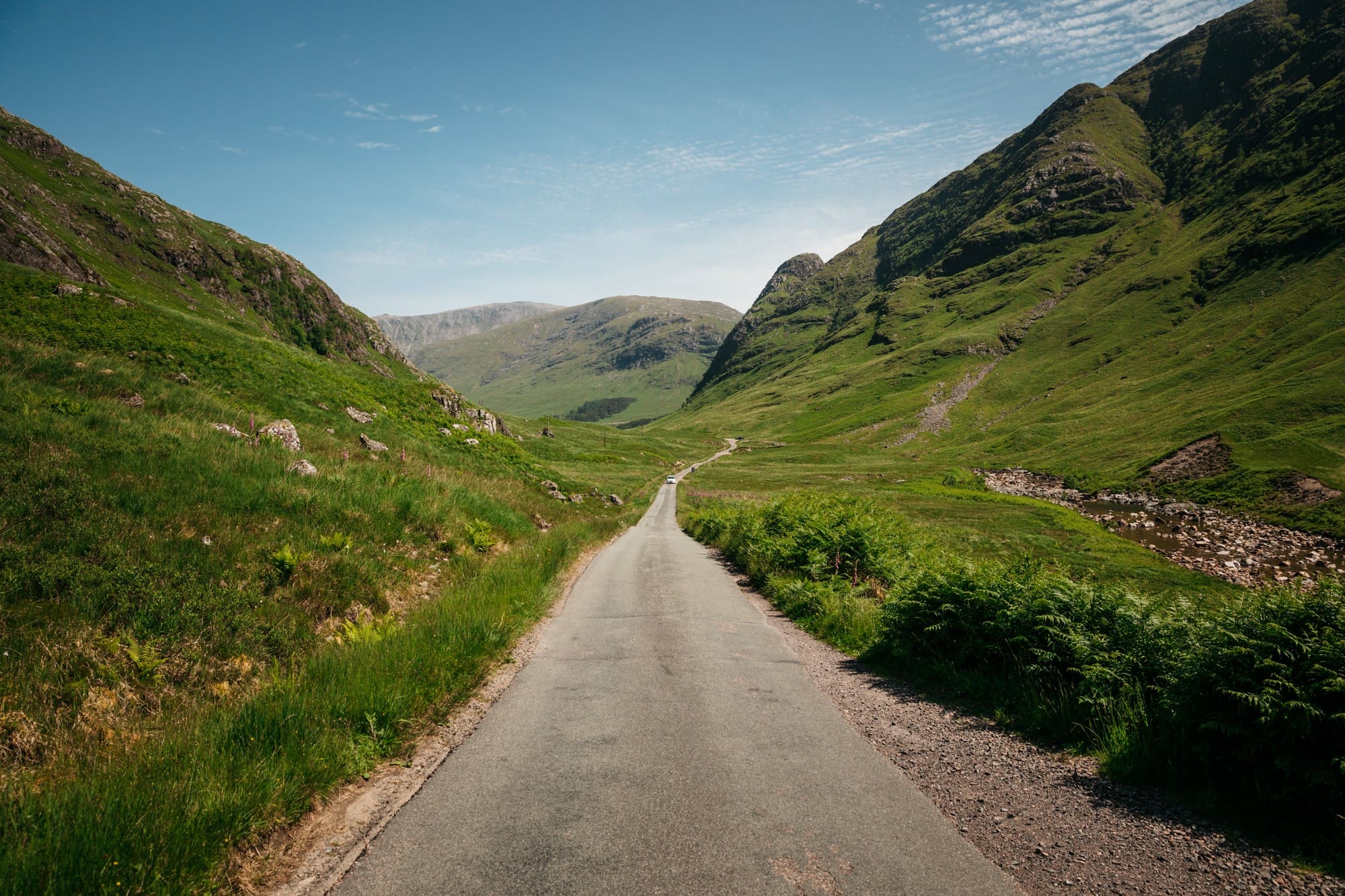
In the Highlands and on the islands, many minor roads are single-track roads: one lane for both directions. It may take a little getting used to, but the system works really well once you understand how it works.
Passing places (wider sections marked with a black-and-white sign) appear at regular intervals along the road. When you meet an oncoming vehicle, one of you pulls into the nearest passing place to let the other pass. If a faster vehicle is behind you, local etiquette is to pull into the next passing place and let it overtake.
A few simple rules to remember:
- never park in a passing place, it needs to remain clear
- drive at a moderate speed, visibility is often limited around bends
- a little wave to the vehicle you pass is customary, and always appreciated
Rules to know before you hit the road
Speed limits
In Scotland, speed limits are given in miles per hour (mph), not km/h. In towns and cities, the limit is generally 30 mph (around 48 km/h), on secondary roads it’s 60 mph (96 km/h), and on motorways it’s 70 mph (113 km/h). On single-track roads, the posted limit is often much higher than what’s sensible to drive at, so adapt your speed to the conditions, not the sign.
Driving licence
A valid national driving licence is all EU citizens need. For vehicle rental, you’ll generally need to have held it for at least 2 years.
Unpaved roads
On the Isle of Mull and in some remote areas, certain roads are still unpaved. Drive carefully and keep a map close at hand.
Tolls
The good news is that there are no road tolls in Scotland. The only cost of the road is the fuel.
Wildlife and local conditions
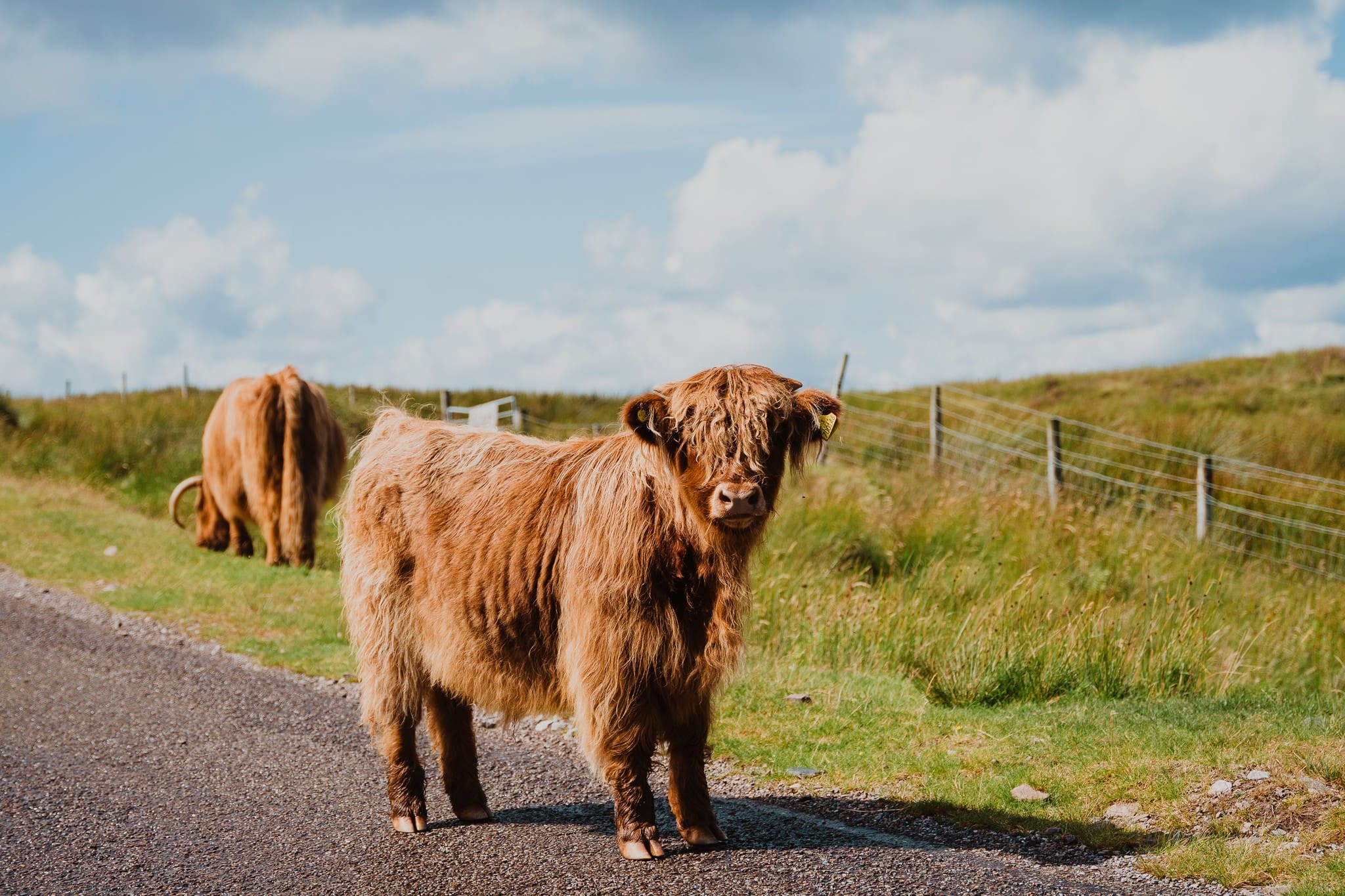
Watch out for sheep (and Highland cows)
In the Highlands, sheep often graze freely and may cross the road without warning. Stay alert, especially in rural areas, and slow down if you spot them near the road.
Fog and rain
Scottish weather can change quickly, and so can visibility. Turn on your headlights if conditions worsen, and don’t hesitate to slow down more than usual.
Fuel in remote areas
In the Northwest Highlands and on the islands, petrol stations are few and far between. Never set off with less than half a tank.
Driving in Scotland with Scotland Nomads
La très grande majorité de nos voyageurs n’ont jamais conduit à gauche avant leur road trip avec Scotland Nomads. Et ça se passe très bien : notre itinéraire alterne routes principales et single track roads pour vous laisser le temps de prendre vos marques, avant d’attaquer les portions les plus sinueuses vers Skye et les Highlands du Nord-Ouest.
Votre SUV équipé d’une tente de toit est confortable et facile à manier, même sur les routes les plus étroites. Et si vous avez le moindre doute avant de partir, notre équipe reste disponible pour répondre à vos questions.